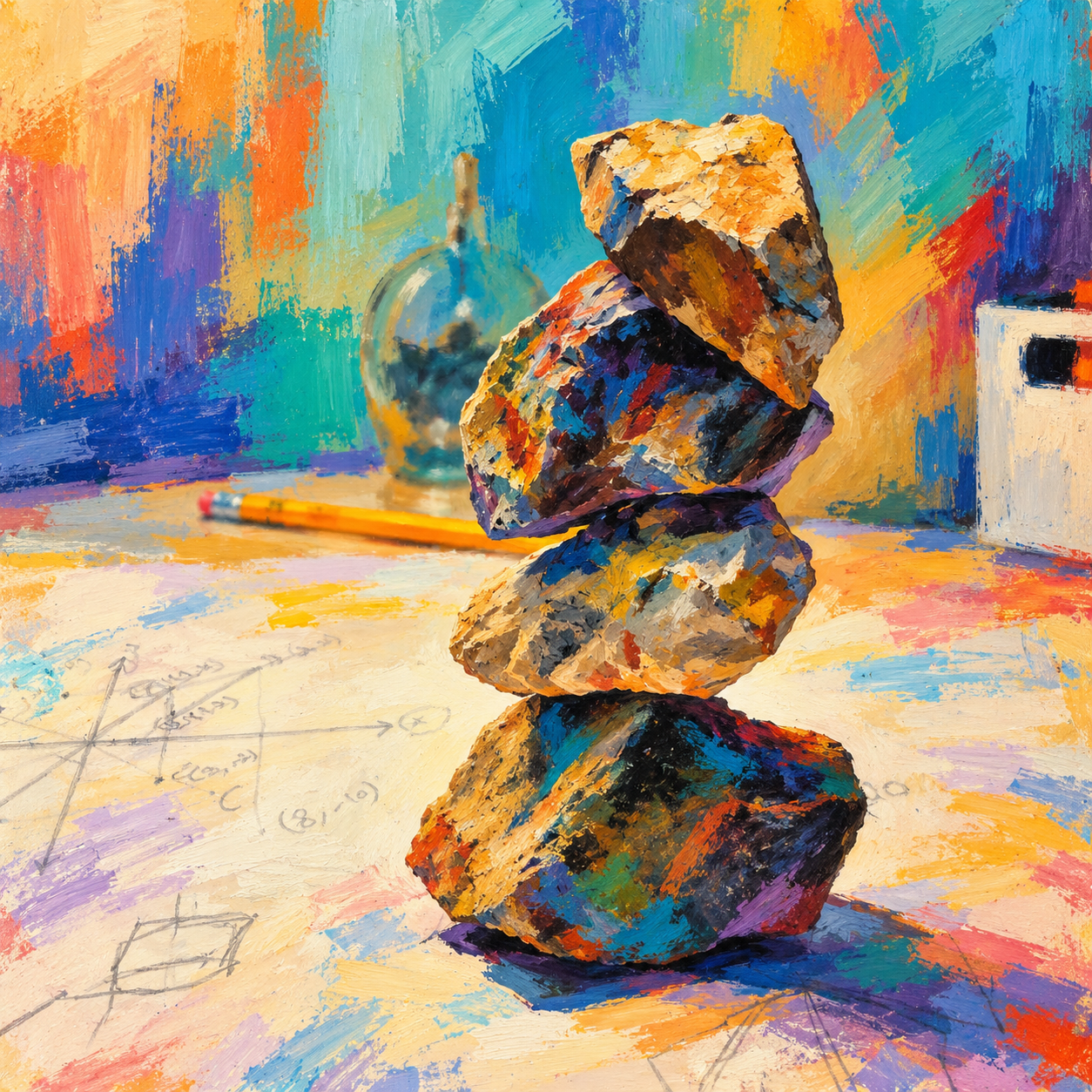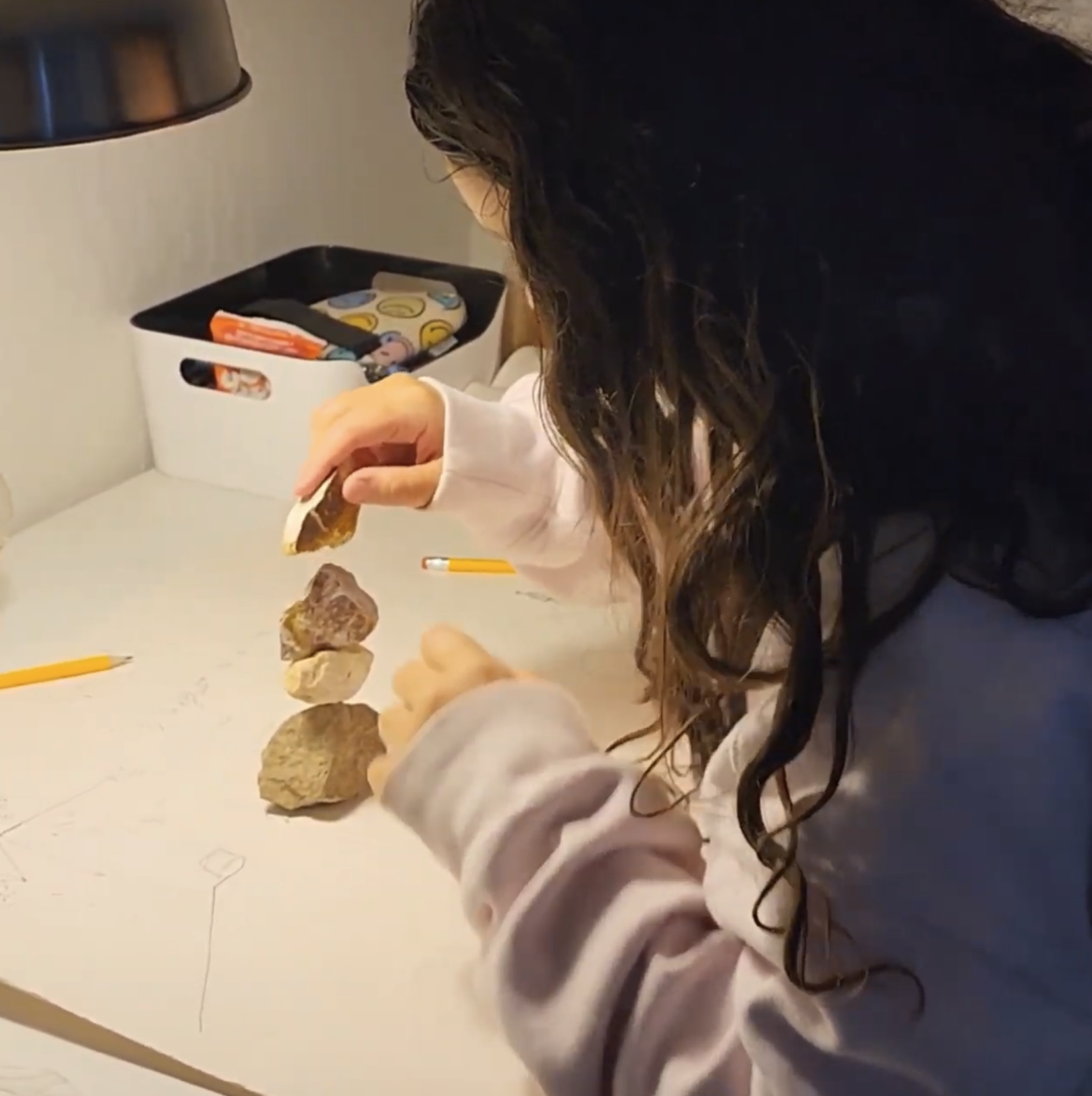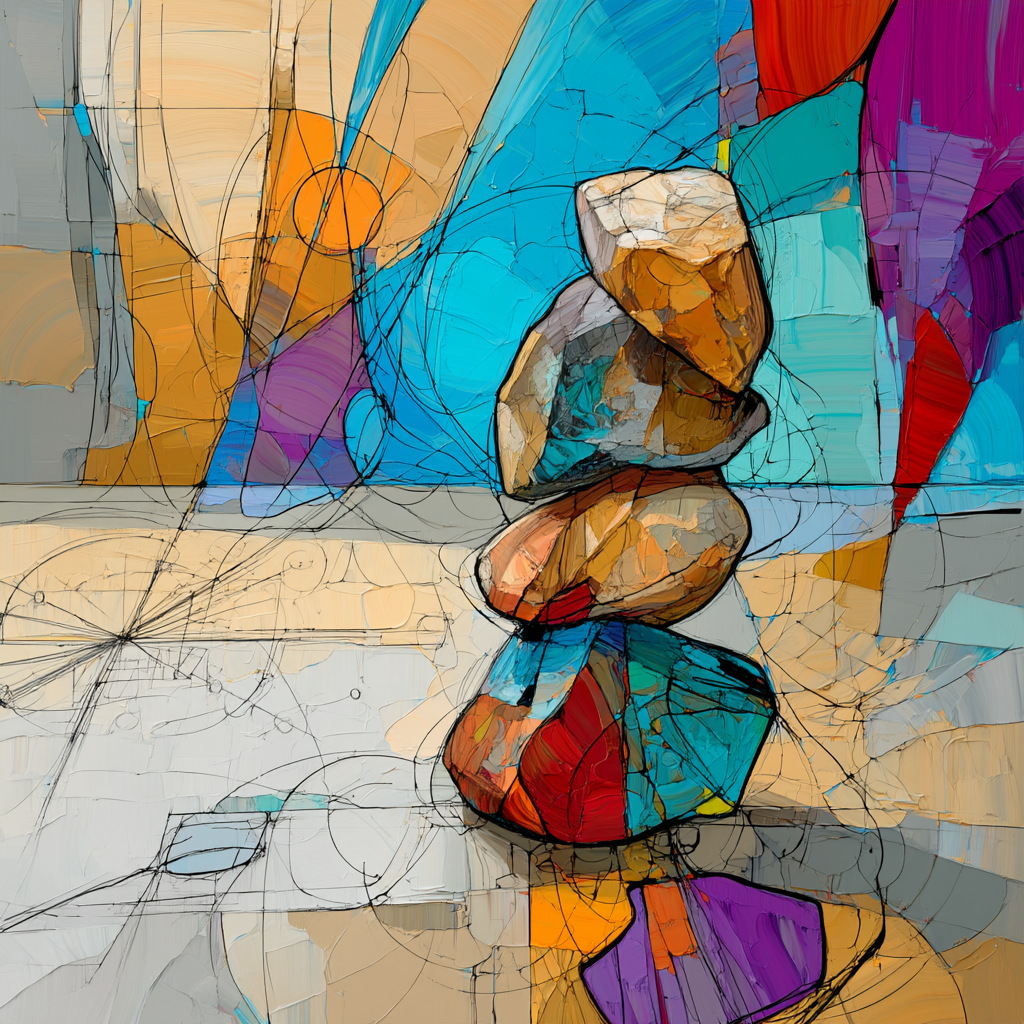
When I first sat down with my kids to teach them how to balance rocks on top of one another, it was a challenge. Rocks are irregular, unpredictable, and quick to tumble when weight isn’t distributed just right. But what started as a simple trial-and-error experiment has transformed into a daily ritual in our home.
Now that they’ve mastered the art of balancing, rock stacking has integrated seamlessly into our daily routine. My kids build stacks while working on their homework, and I even challenge them to create a balanced tower before heading off to school in the morning or winding down for bed at night.
What surprises me most isn’t just their towers—it’s everything happening quietly behind the scenes.
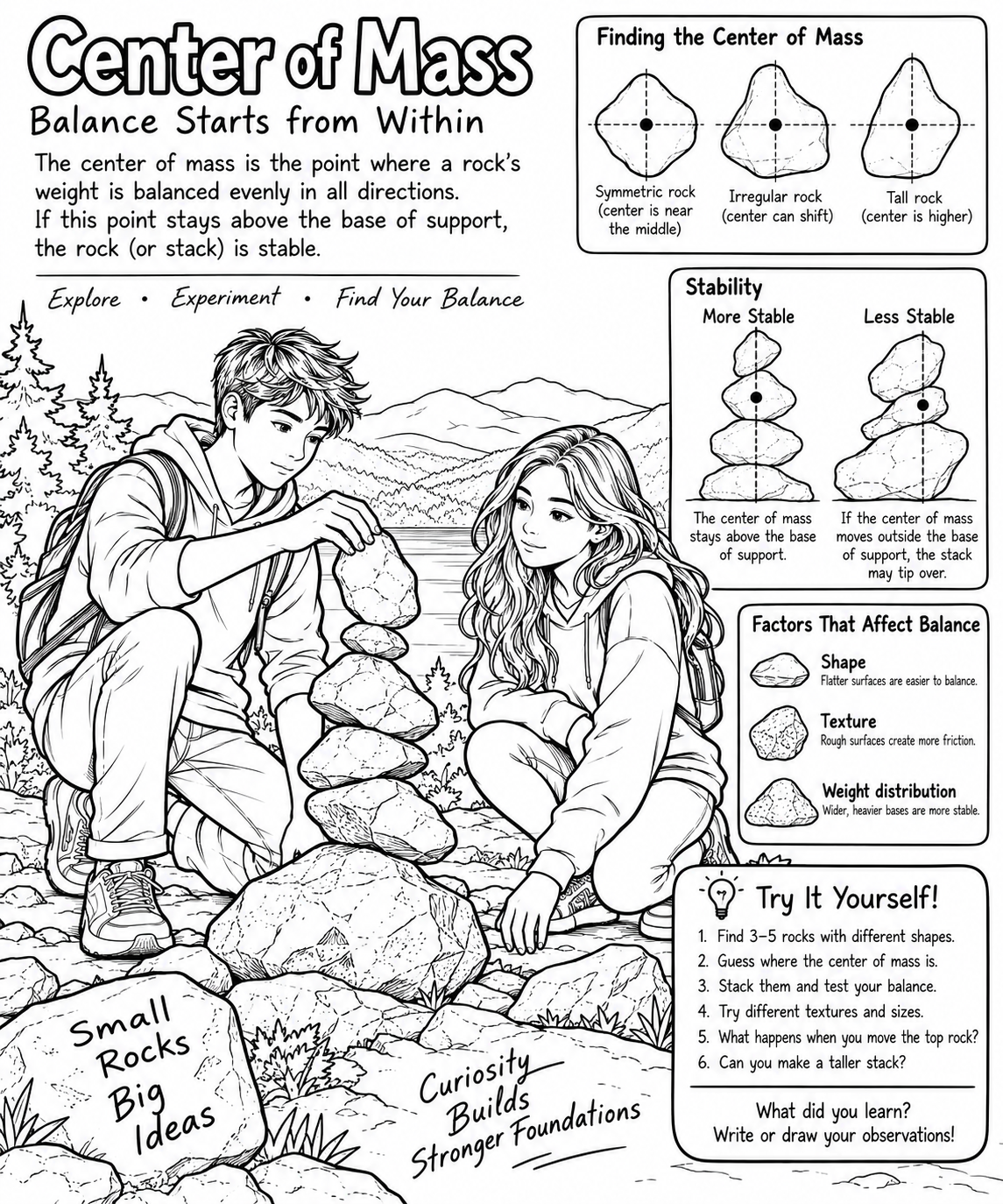
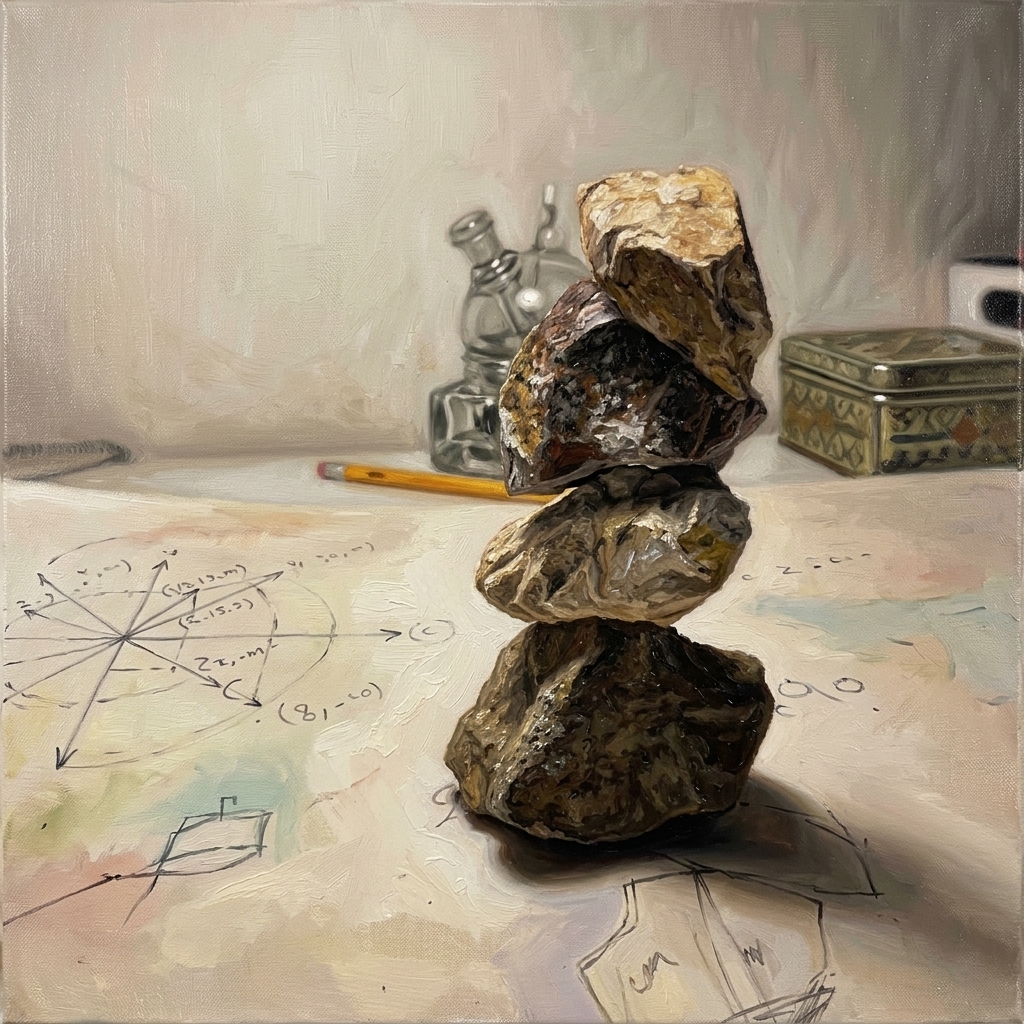
While the immediate benefits like hand-eye coordination, deep focus, and frustration tolerance were clear right away, rock stacking turned out to be an incredible, hands-on gateway to teaching math and physics.
Everyday Science in Action
Through stone balancing, abstract concepts suddenly become tangible:
- Center of Gravity: They learn visually and tactilely where an object’s mass lies.
- Friction and Mass: They quickly discover why rough surfaces grip better than smooth ones and why wider bases hold heavier loads.
- Geometry and Angles: Fitting non-uniform shapes together builds spatial reasoning faster than a textbook ever could.
Bringing the Experience Home
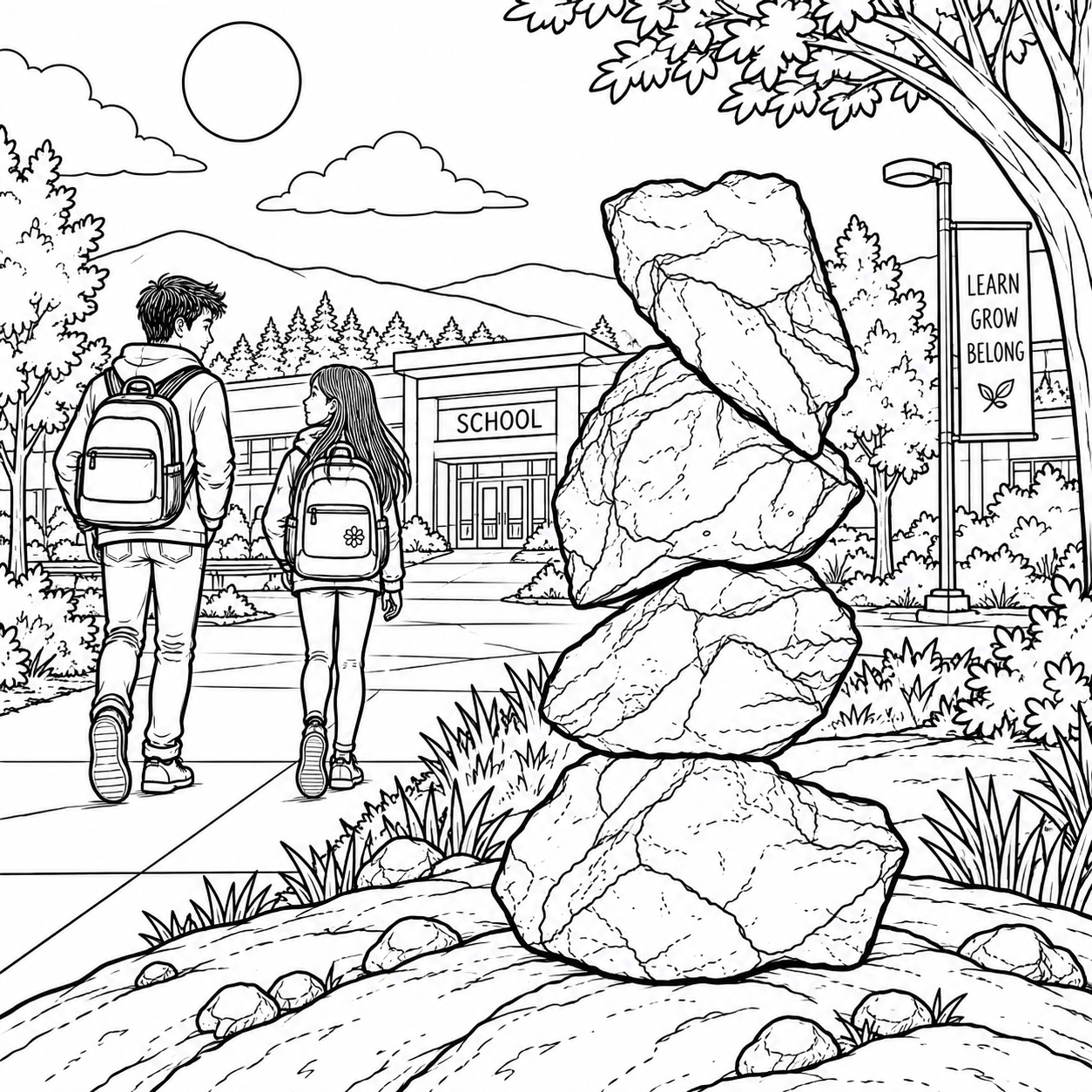
Seeing how much joy and focus this activity brought them inspired me to take it a step further. I ended up designing custom coloring pages and printing artwork featuring stacked rocks so they could hang them up in their rooms as a reminder of patience and balance.
In a world filled with screens and fast-paced distractions, taking a few minutes to balance a few stones has proven to be one of the most grounding, educational activities we’ve found. Sometimes, the best learning tools are the ones right under our feet.