What AI can tell us about a painting—and what it may never replace
Take a painting and upload it to an AI.
Within seconds, it can give you an impressive analysis.
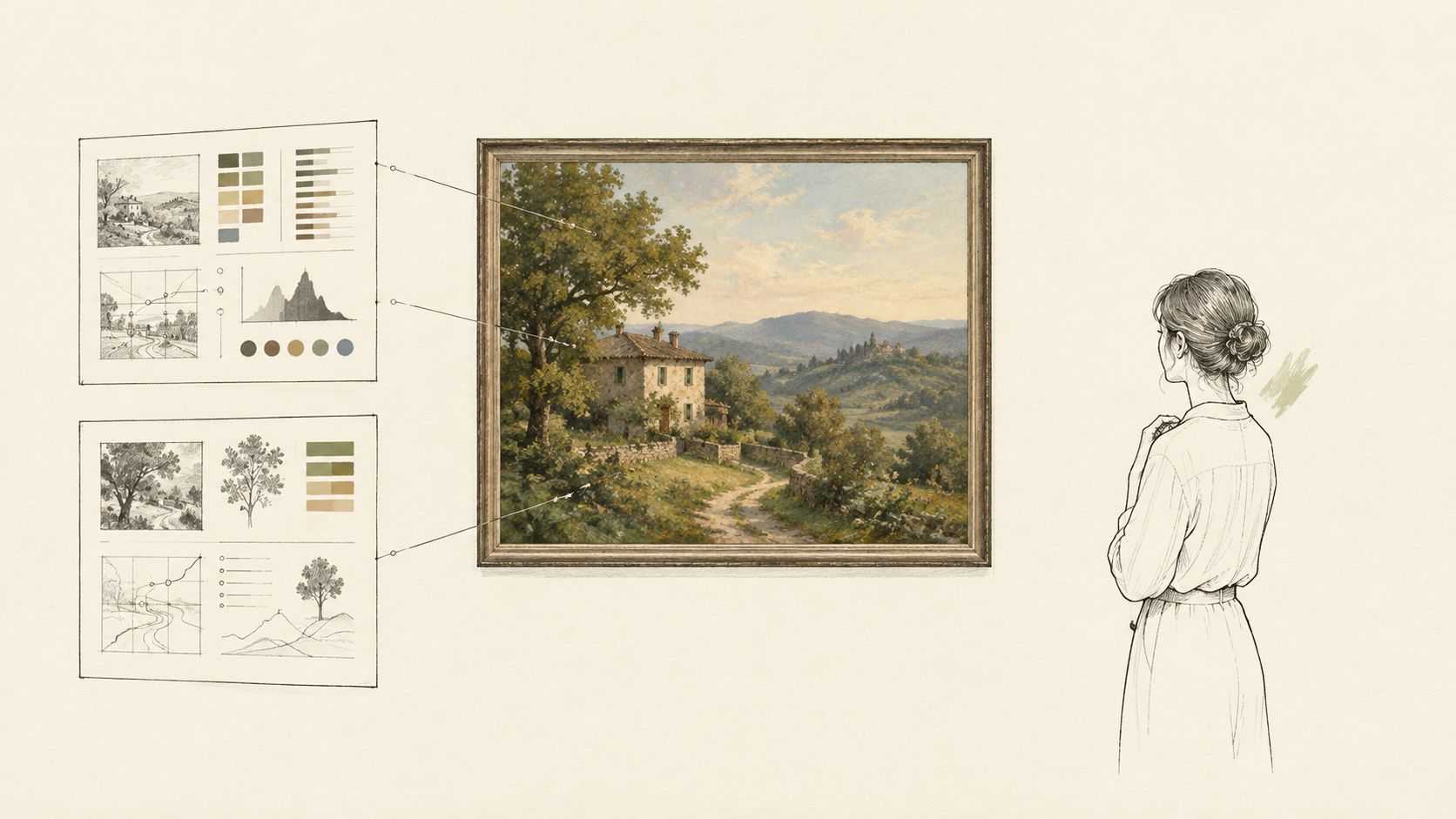
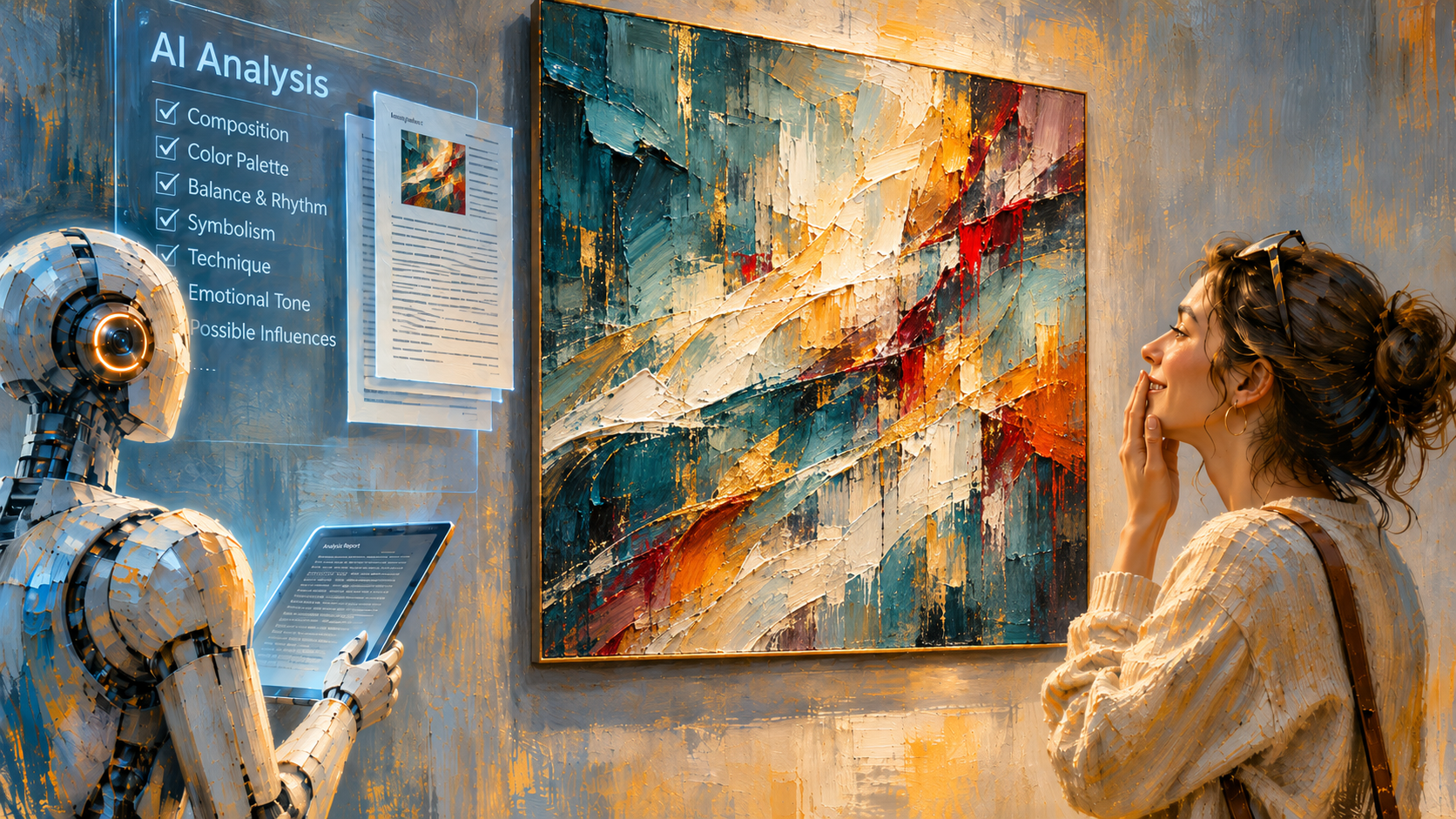
It might describe the composition, color palette, balance, perspective, brushwork, texture, symbolism, lighting, emotional tone, and possible influences. It may notice relationships between shapes that you missed. It might compare the work to different artistic movements or suggest what the artist was trying to communicate.
The response could easily become two pages long.
And much of it might be very good.
But then imagine showing the same painting to another person.
They stand in front of it for a few seconds.
They become quiet.
Then they smile and simply say:
“Oh…”
Which response has more value?
I am becoming increasingly interested in that question.
AI Can Analyze What It Sees
I enjoy experimenting with AI and art. One of the fascinating things about AI is its ability to look at an image and break it down into details.
Ask AI about a painting, and it might tell you that a dark area creates visual tension, that repeated circles establish rhythm, or that a certain color draws the viewer’s eye toward the center.
This can be extremely useful.
As an artist, I can ask questions about composition, color relationships, geometry, or symbolism. AI can sometimes point out something I had not consciously noticed.
It gives language to visual information.
And that is valuable.
But analysis and experience are not necessarily the same thing.
The Painting Happens Somewhere Else
When a person looks at a painting, something much less measurable can happen.
A particular color might remind them of their childhood.
A shadow might make them uncomfortable without their knowing why.
A simple shape might bring back a memory of someone they loved.
They may smile.
They may become quiet.
They may stare at one corner of the painting much longer than I expect.
Or they may simply say:
“Ohhh…”
There may be no explanation after that.
And perhaps none is needed.
That small reaction contains something that two pages of analysis might not.
It contains a moment.
The Difference Between Description and Feeling
AI can describe sadness remarkably well.
It can identify visual characteristics often associated with sadness: darker colors, downward gestures, isolation, empty space, and certain facial expressions.
But recognizing the structure of sadness is different from suddenly feeling something because a painting reminds you of your father, your childhood, a place you once lived, or a moment you thought you had forgotten.
That difference matters to me.
A painting does not exist only as pigment, shape, composition, or information.
Part of the artwork is created inside the person looking at it.
And every viewer brings something different.
Their history becomes part of the painting.
Their memories become part of it.
Even their mood on that particular day changes what they see.
In that sense, perhaps a painting is never completely finished when the artist puts down the brush.
The viewer finishes part of it.