How stillness, my cat, and AI helped me develop a visual concept before painting it
Artists are often described as people who express, communicate, and send ideas into the world. But before an artist can express anything, there must first be a period of receiving.
We receive light, sound, movement, emotion, memory, and atmosphere. We observe what is happening around us and allow those experiences to settle inside us before transforming them into art.
The idea behind these images began with a simple question:
What would a person look like if they were only receiving and not broadcasting?
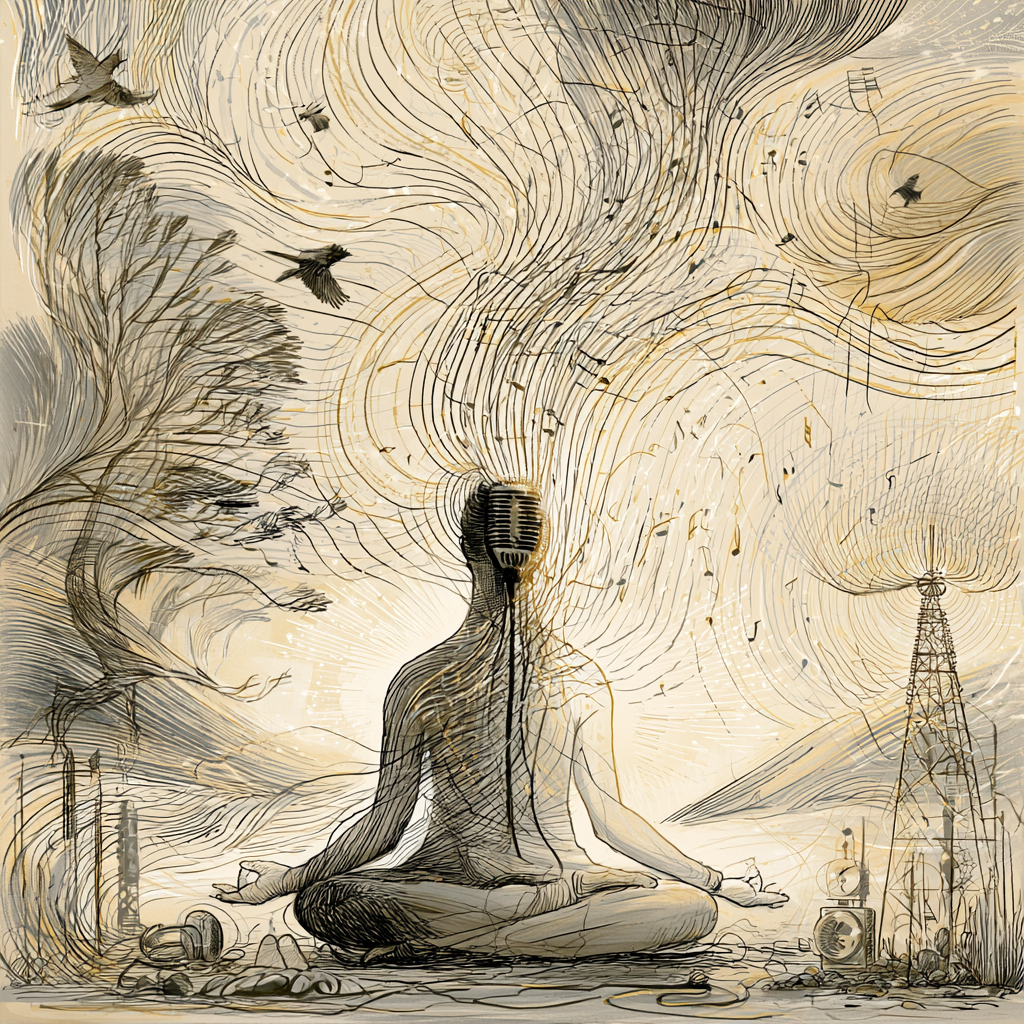
I imagined a person sitting in deep meditation while bird calls, wind, natural sounds, and radio signals moved toward him from every direction. His body would function almost like a sensitive microphone, quietly capturing everything around him. Nothing would come outward from the figure. He would not be speaking, projecting, or trying to influence the environment.
He would simply be listening.
What I Learned From My Cat
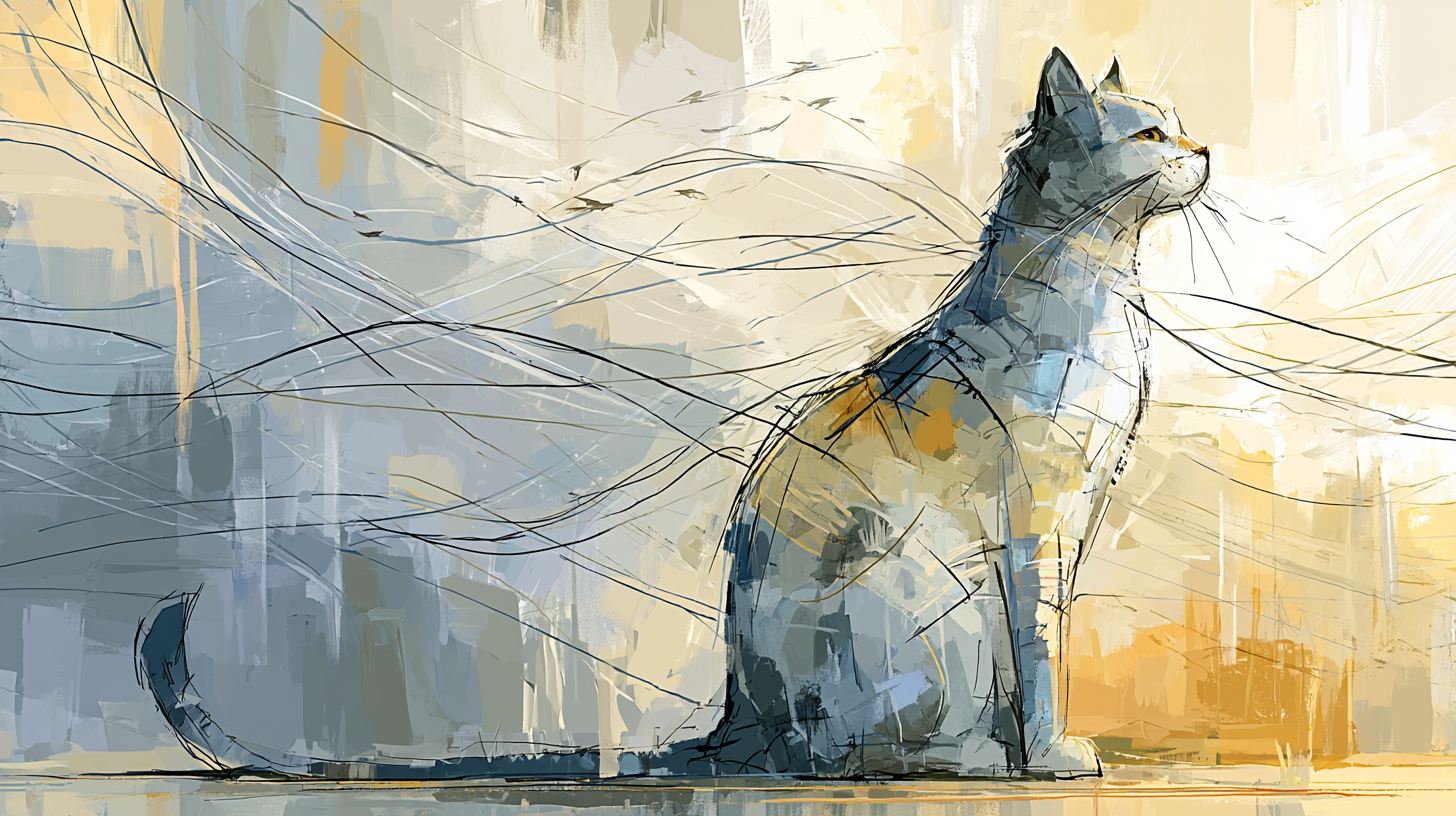
Part of this idea came from watching my cat.
My cat can sit quietly for a long time and observe everything around him with remarkable concentration. He notices small movements, distant sounds, changing shadows, birds outside the window, and details that I often overlook.
He does not rush to react.
He watches deeply before deciding whether anything requires his attention.
That behavior reminded me that observation is not passive. True observation requires patience, concentration, and the willingness to remain still. My cat is not disconnected from the environment when he is sitting quietly. He is intensely connected to it.
As artists, we sometimes begin creating too quickly. We recognize a subject, give it a name, and immediately start drawing or painting our existing idea of it. But deeper observation asks us to slow down and look beyond the name.
A face is not simply a face. It is a collection of shadows, proportions, tensions, memories, textures, and emotions.
A bird call is not just a sound. It has rhythm, distance, direction, repetition, and silence between its notes.
My cat reminded me to receive the world before trying to interpret it.
Visualizing the Idea With AI
These images are not paintings that I have physically completed. They are AI-generated visual studies based on my concept and artistic direction.
Painting an idea like this by hand—with layered faces, delicate line work, sound waves, birds, wind patterns, radio frequencies, and abstract textures, could take a significant amount of time. Before committing to a large canvas, I wanted to see whether the concept could work visually.
With the help of AI, I was able to visualize what I had imagined.
The AI did not create the original idea for me. The concept came from my observations, my artistic interests, and the quiet behavior of my cat. AI acted more like a visualization tool, helping me explore composition, mood, texture, movement, and symbolism.
This process is similar to making preliminary sketches, color studies, or digital mockups. The difference is that AI can produce a more complete visual interpretation very quickly, allowing an artist to examine an idea before deciding how to paint it.
Two Interpretations of the Same Concept
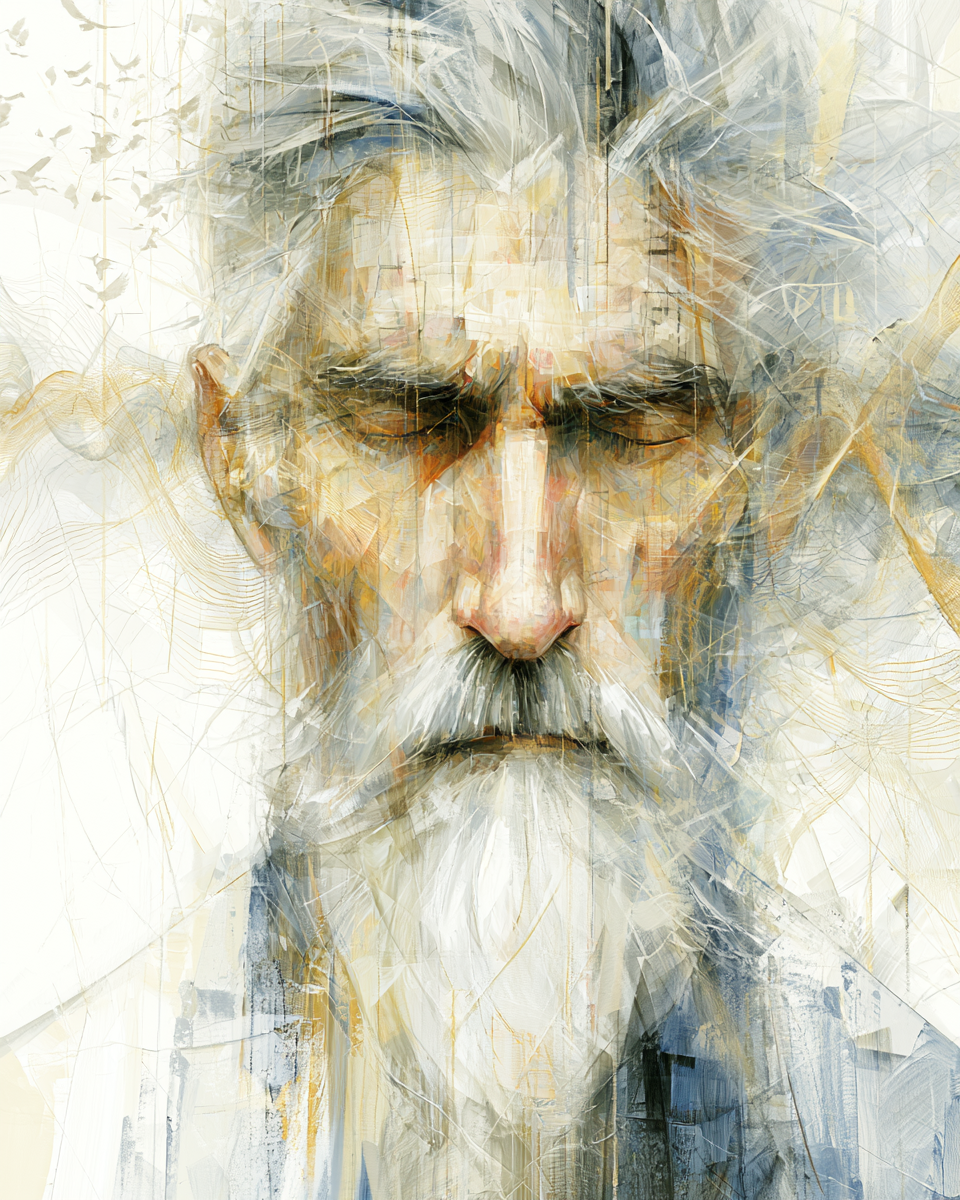
The first image presents the receiver through an abstract portrait.
The man’s eyes are closed, and his face appears to be constructed from layers of translucent marks, fragmented geometry, soft colors, and fine lines. His expression suggests concentration rather than sleep. The overlapping textures represent the many signals, memories, and sensations that enter the mind during a moment of deep observation.
The face is visible, but it is not completely solid. It appears to dissolve into the surrounding visual information. This creates the feeling that the boundary between the person and the environment is becoming less distinct.
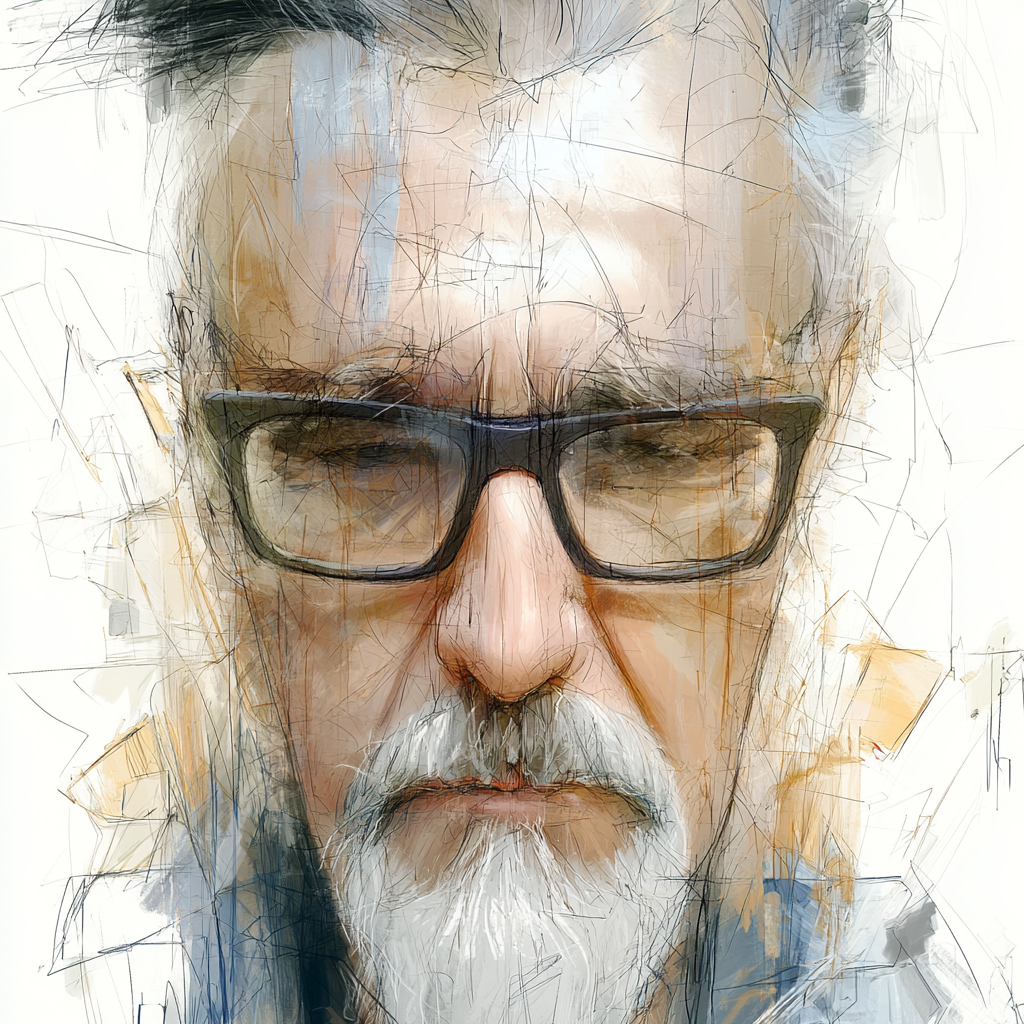
The second image explores the same idea through the full body.
A seated figure appears in meditation while wind, birdsong, musical notes, radio signals, and environmental patterns move around and toward him. The figure resembles both a human being and a microphone. Instead of transmitting sound, he receives it.
The flowing lines are essential to the composition. They represent the invisible information surrounding us at all times: air currents, voices, frequencies, natural sounds, and movements.
The person remains still, but the world around him is active.
AI as a Preliminary Art Technique
For me, AI is most useful when it helps make an invisible idea visible.
An artist may have a clear feeling or concept but still be uncertain about the composition. Should the figure be realistic or symbolic? Should the sound waves be geometric or organic? Should the environment be dark and dramatic or open and quiet?
Generating visual studies makes it possible to test these decisions before beginning the physical artwork.
I may eventually use these images as references for a painting. However, the final painting would not need to copy either image exactly. I could combine elements from both, simplify the composition, change the colors, or allow the physical properties of paint to take the work in another direction.
The AI image becomes a starting point rather than an ending.
The Artist as a Receiver
This project changed the way I think about artistic expression.
We often focus on what artists produce, but perhaps an artist’s most important ability is the capacity to notice. Before a painting becomes visible, the artist must receive something from the world.
Stillness allows that reception to happen.
My cat taught me that it is possible to be quiet without being disengaged. His silence contains attention. His stillness contains awareness. By observing without immediately reacting, he experiences details that are easy to miss.
That is the central idea behind these images:
Before we speak, create, or broadcast, we must first learn how to receive.