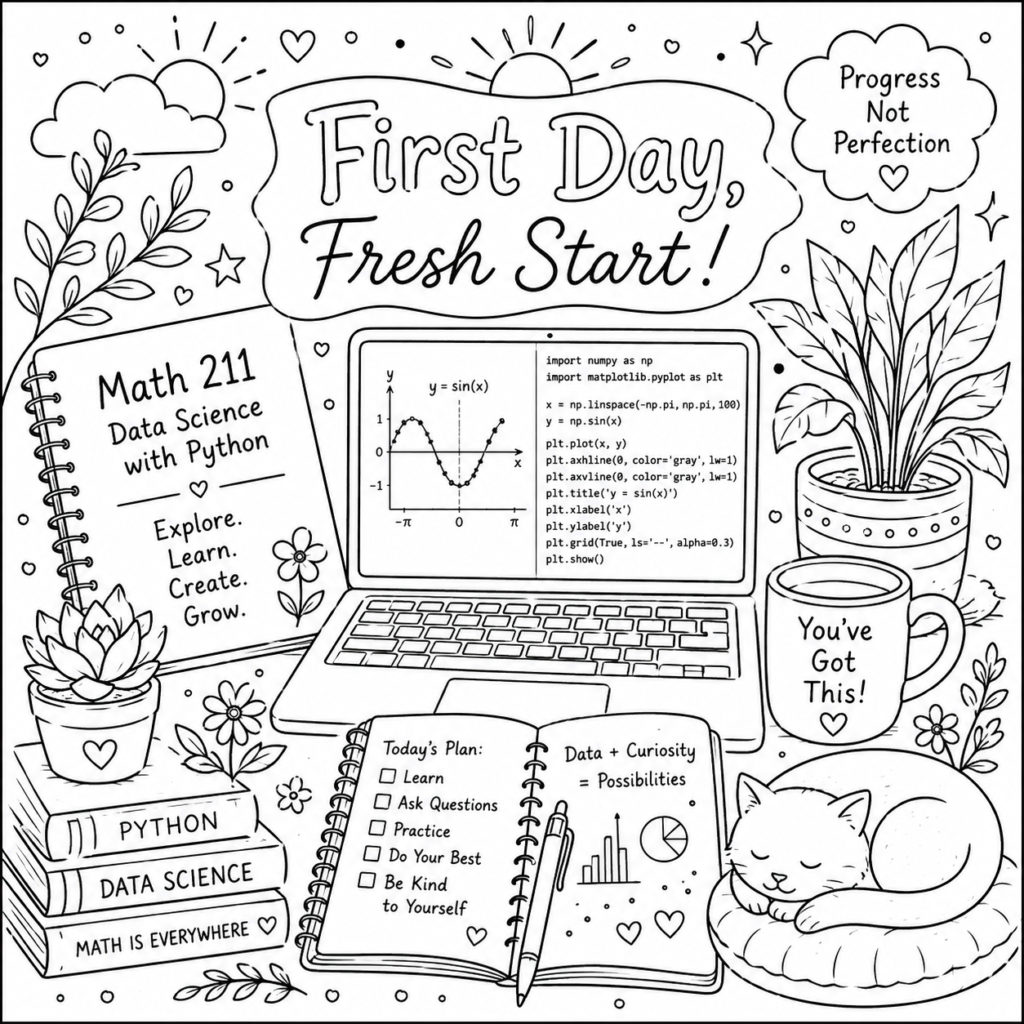
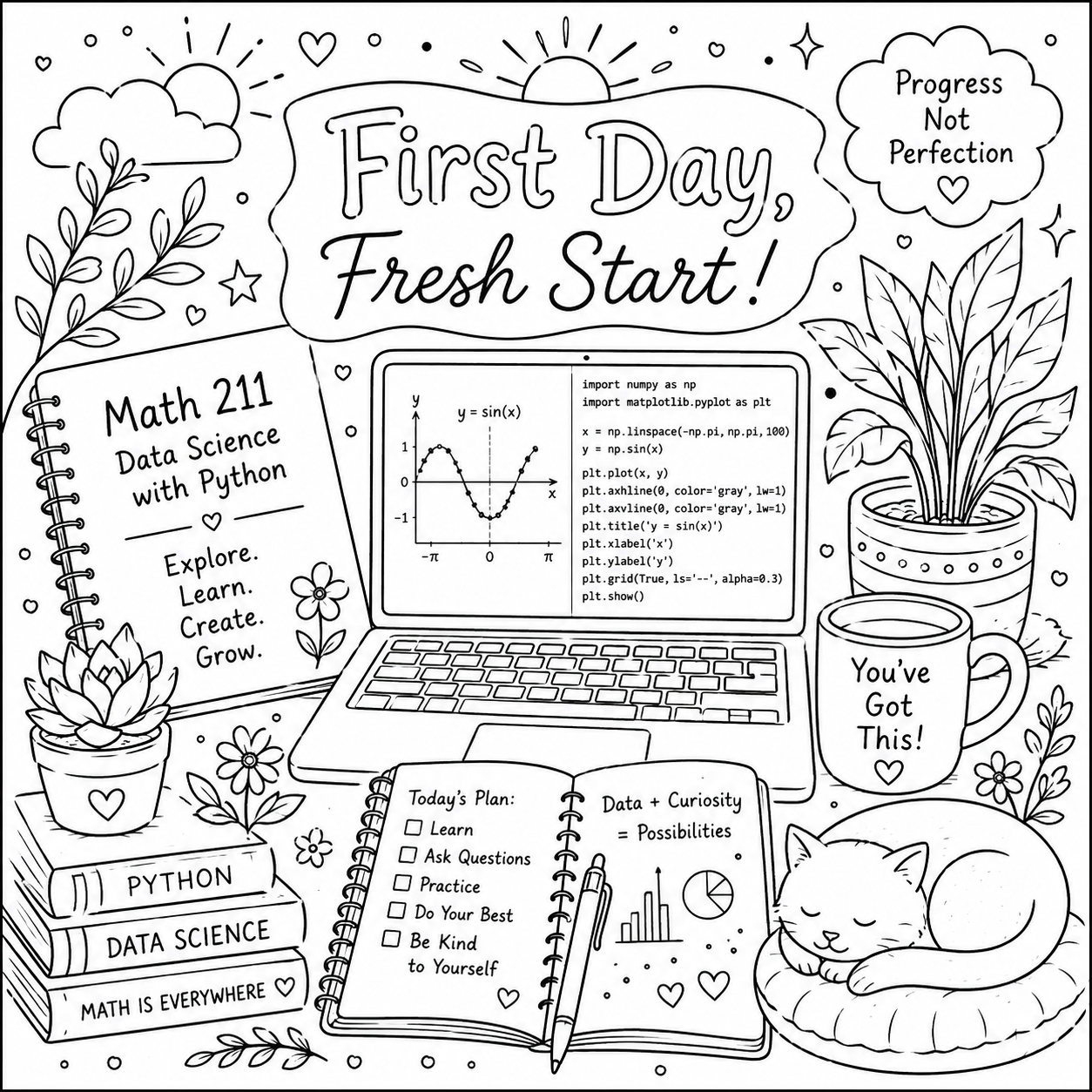
During the first eight days of my summer Data Science course, I have been experimenting with a new way to introduce each lesson: an adult coloring page created with the help of artificial intelligence.
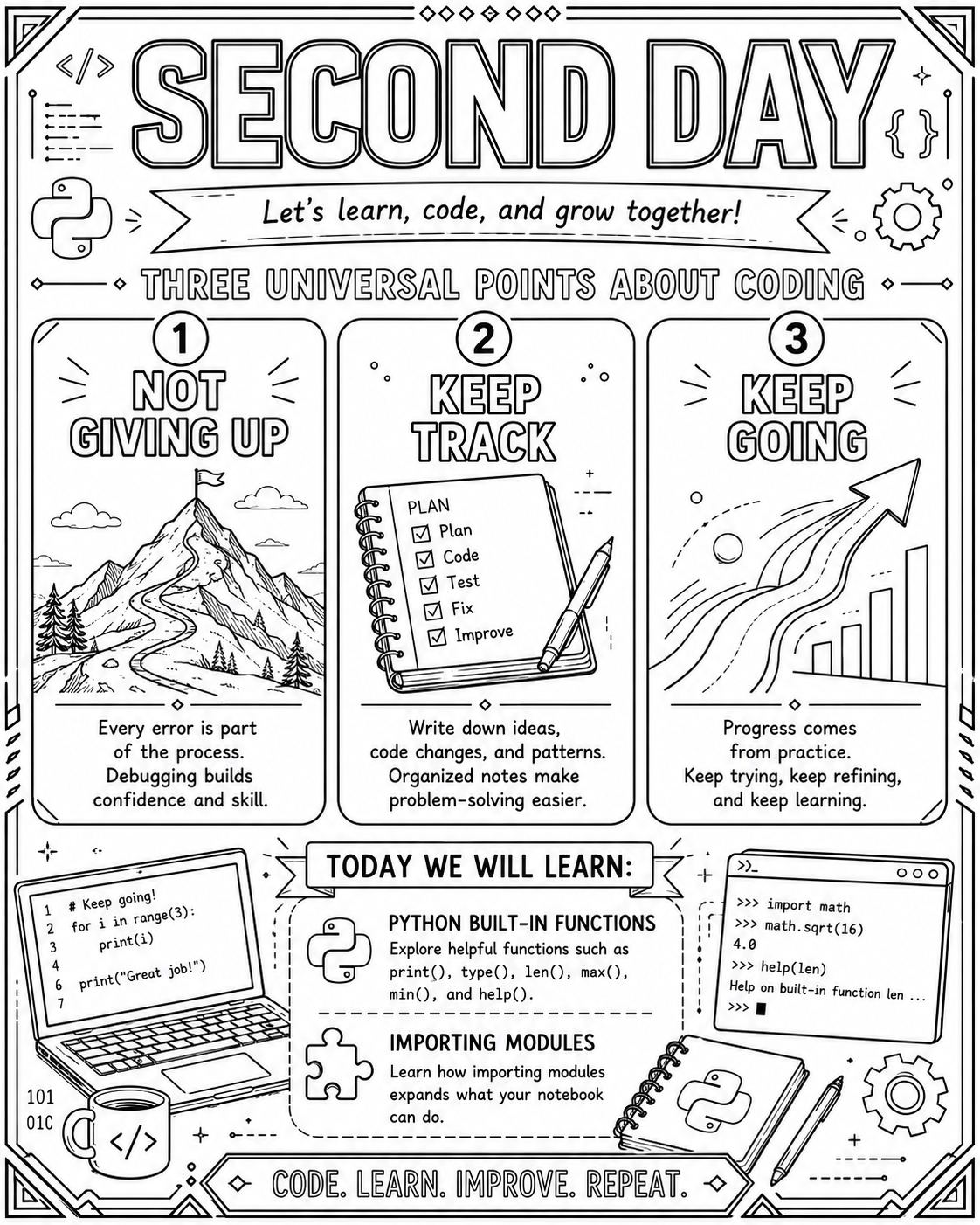
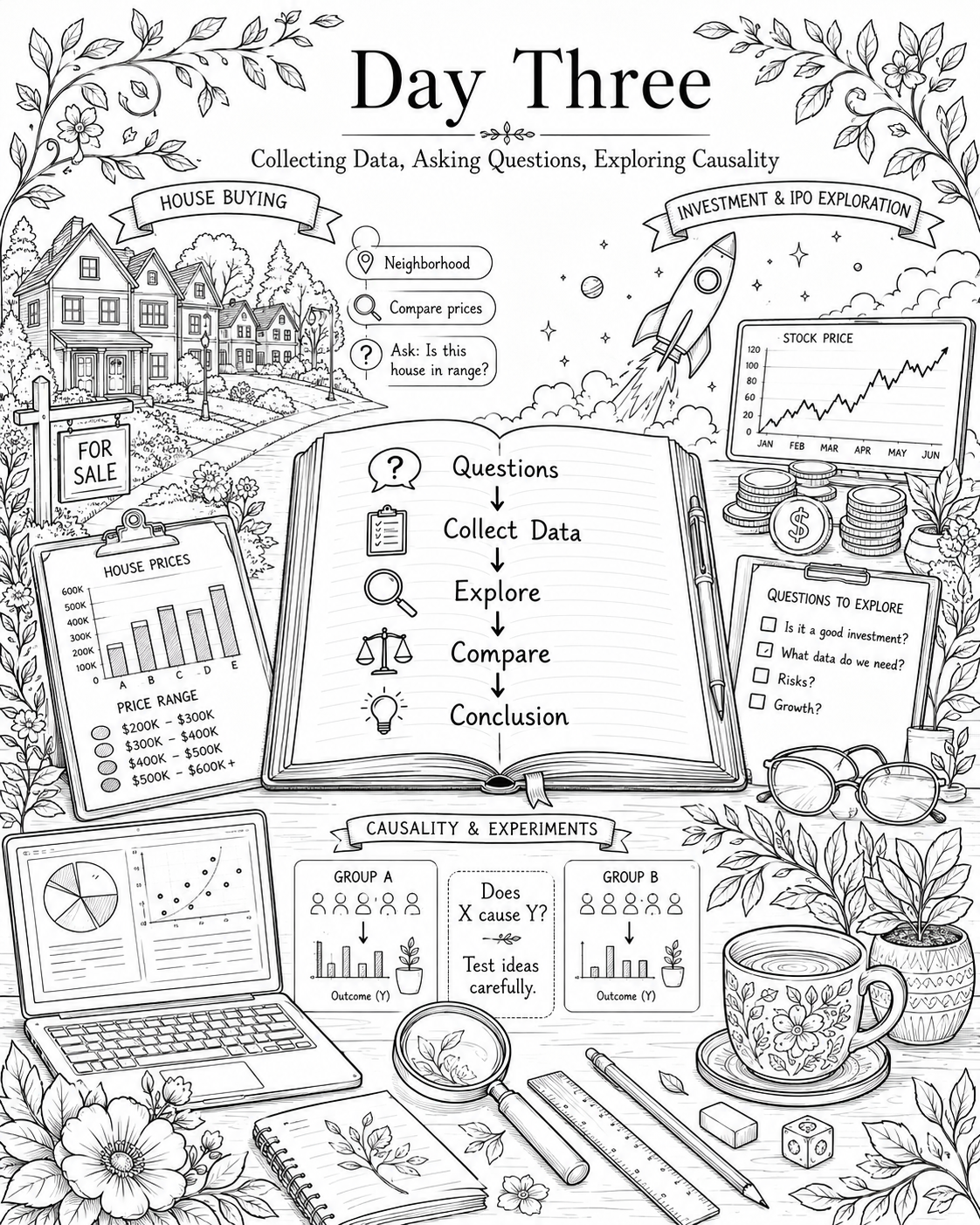
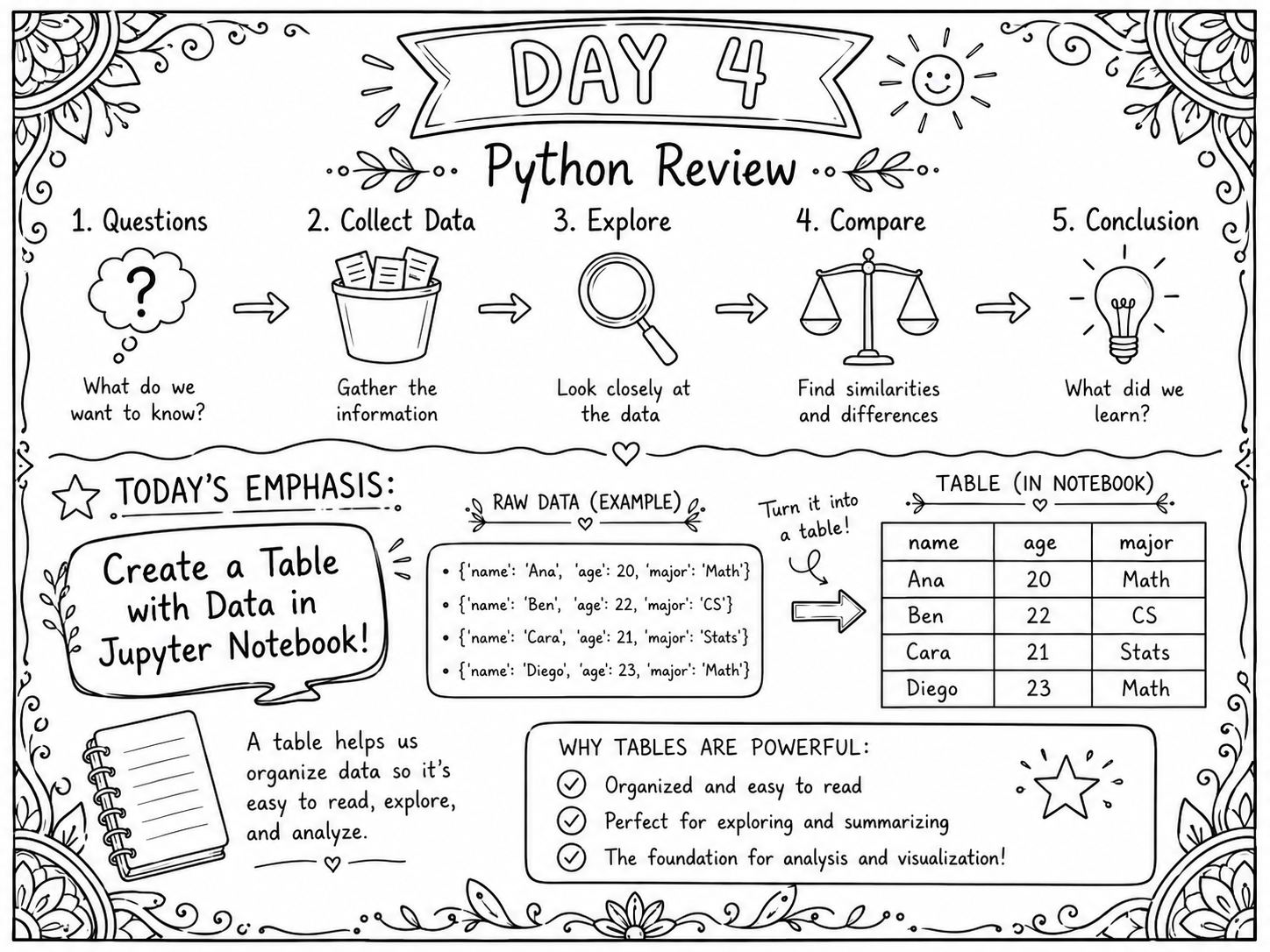
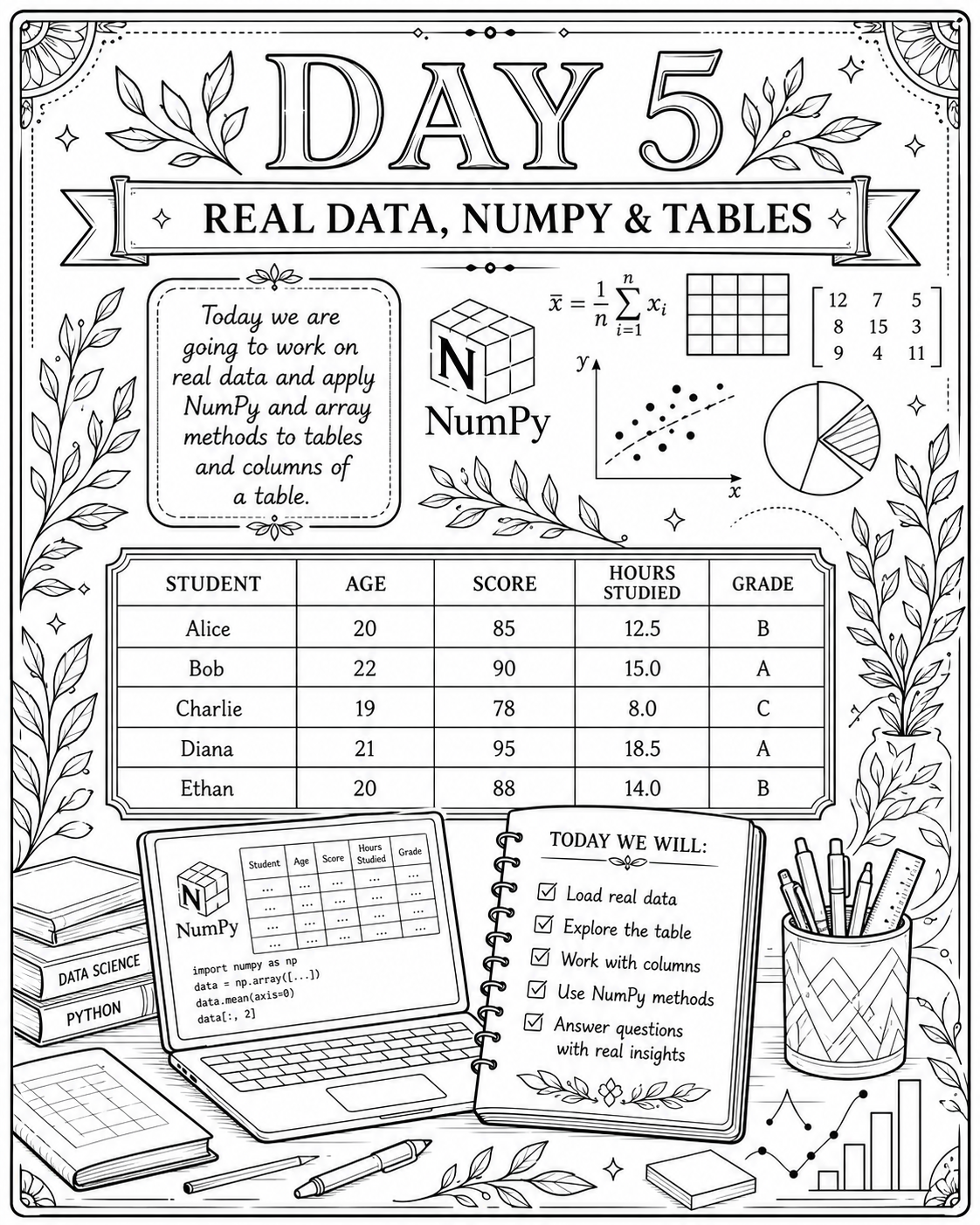
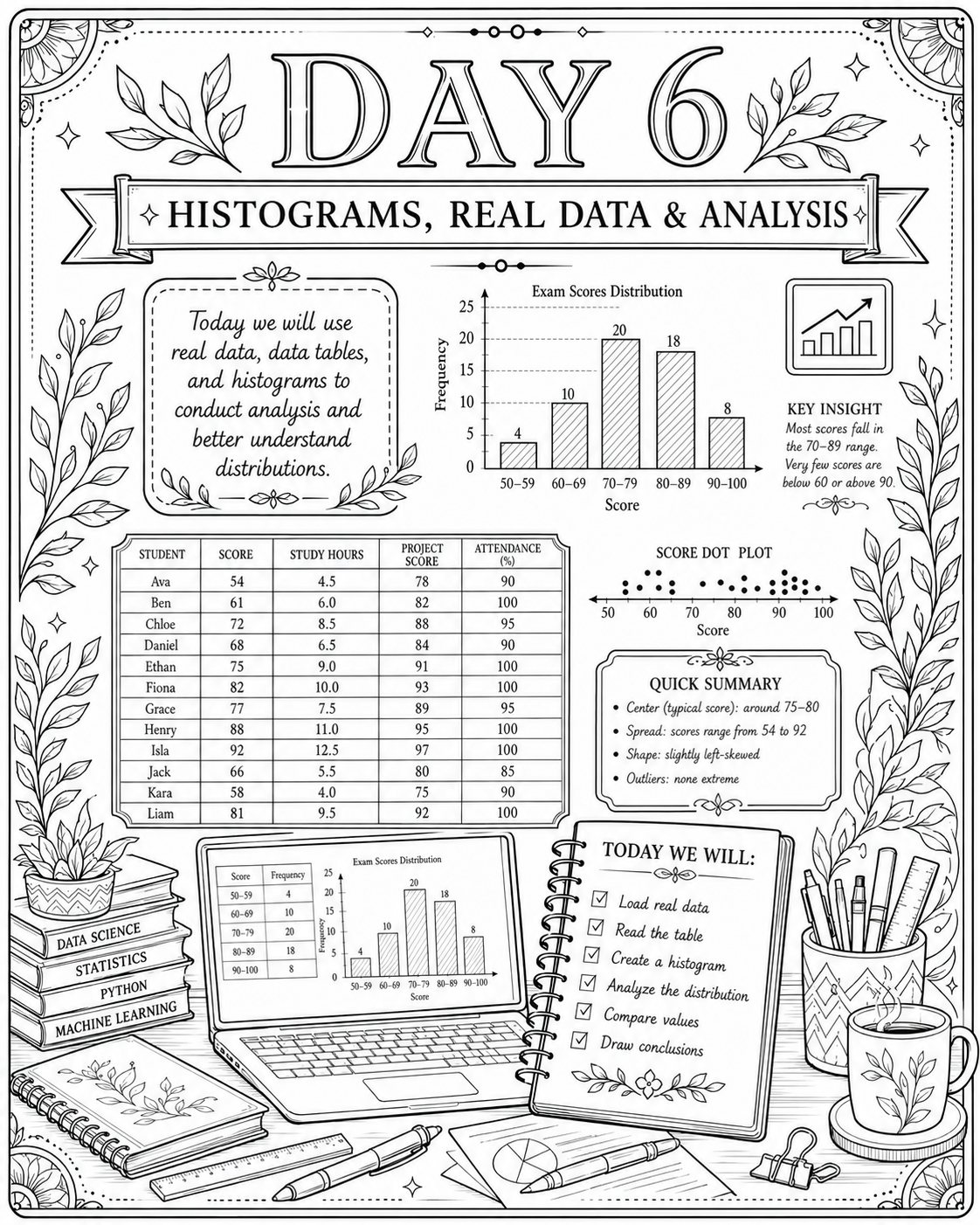
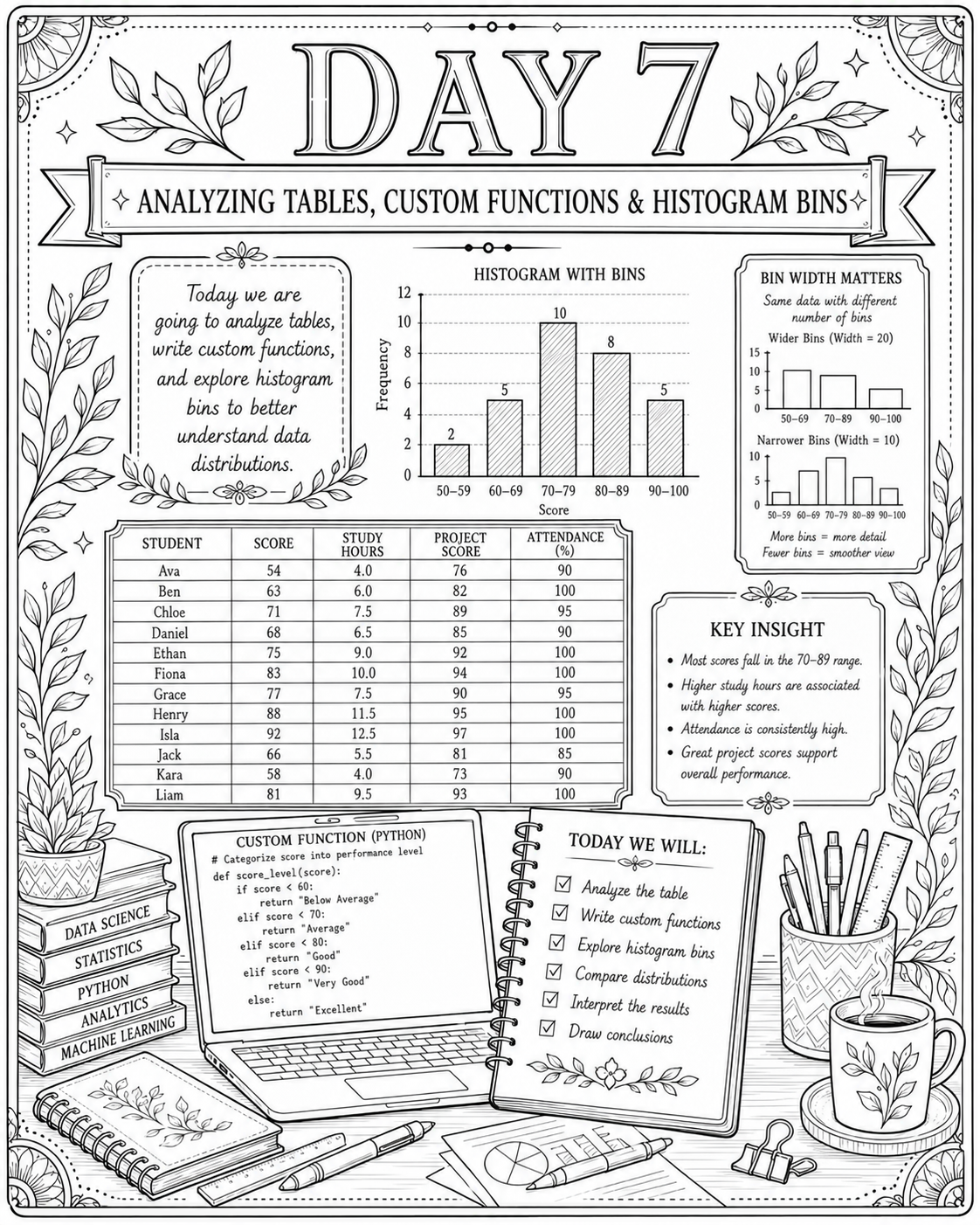
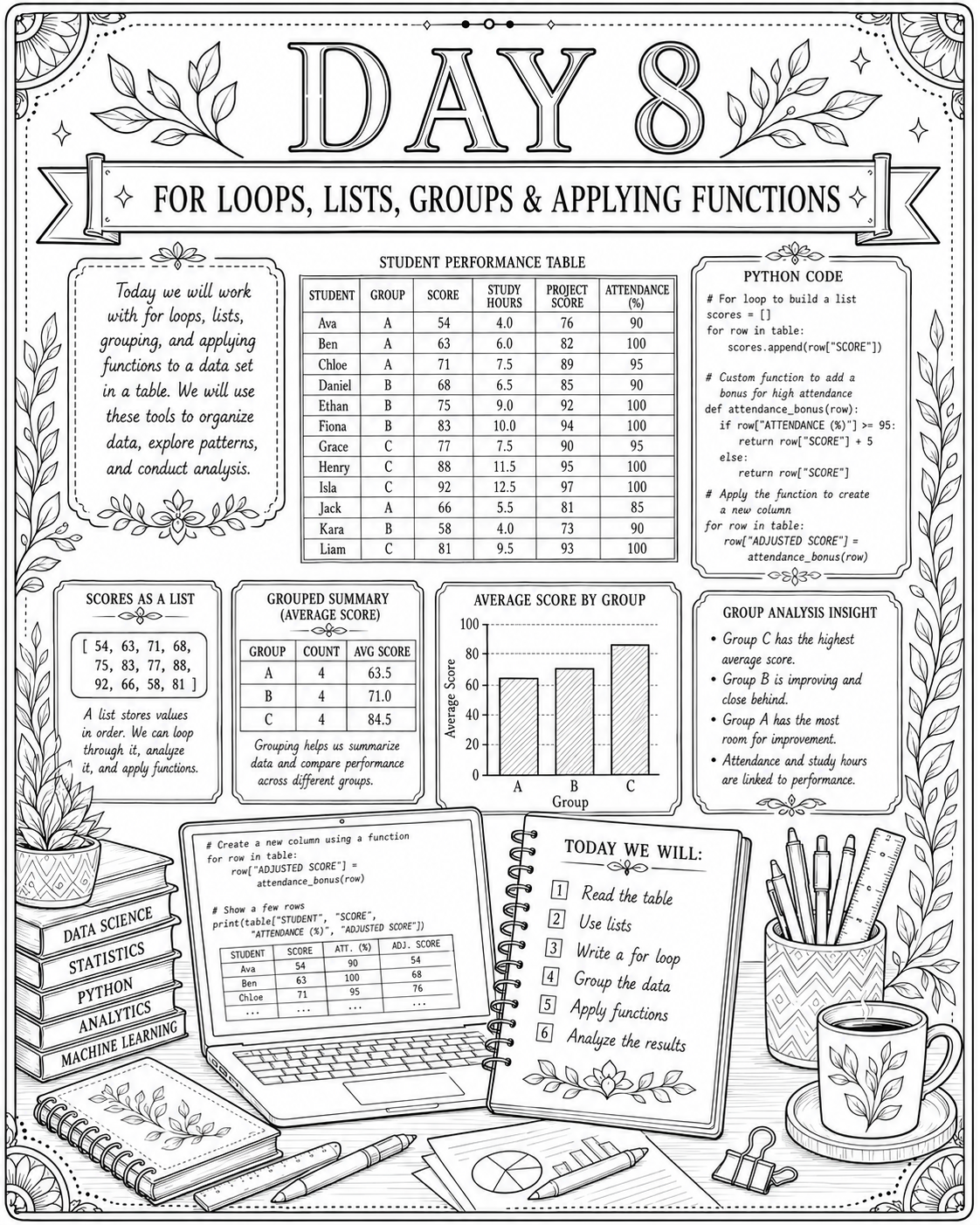
Each coloring page represents the main topic of the day. So far, the drawings have covered Python fundamentals, collecting and analyzing data, working with tables, NumPy arrays, histograms, custom functions, loops, lists, grouping data, and applying functions to datasets.
A Visual Introduction to Each Lesson
At the beginning of each class, I share a new coloring page connected to the concepts we are about to study. The goal is not simply to create artwork. The drawing gives students a visual overview of the lesson before we begin working with code and data.
I have noticed that students often pay closer attention when the topic is introduced visually. The coloring pages also help create a more relaxed and welcoming classroom environment.
Data science can sometimes feel technical or overwhelming, especially for students who are new to programming. Beginning with a creative activity can reduce stress and make the lesson feel more approachable.
Connecting Creativity, AI, and Education
Artificial intelligence has made it possible to quickly transform the subject of each lesson into a meaningful illustration. I describe the concepts, tools, and learning goals, and AI helps turn those ideas into an adult coloring page.
This process combines several areas that I value as an educator:
- Data science and programming
- Art and visual communication
- Student engagement
- Stress-free learning
- Artificial intelligence in education
The coloring pages are optional, but they give students another way to connect with the course material. Some students may learn best by coding, while others benefit from visual examples, discussion, repetition, or creative activities.
Eight Days Completed, 27 Days Remaining
We have completed the first eight days of the summer session, with 27 days remaining.
During the rest of the course, students will continue building their skills step by step. We will move from working with tables, functions, loops, and data visualization toward probability, inference, machine learning, and eventually building a classification model.
My goal is to create a new coloring page for every remaining class session. By the end of the course, the collection will visually represent the complete learning journey—from introductory Python concepts to data analysis and classification.
Making Learning More Memorable
Education does not always have to follow one format. Coding exercises, lectures, labs, projects, discussions, and creative activities can work together to make learning more effective.
This experiment has reminded me that even a small creative change can influence how students respond to a lesson. When students feel relaxed, curious, and engaged, they may be more willing to ask questions, experiment with code, and continue when a problem becomes difficult.
I look forward to creating the next 27 coloring pages and seeing how the collection develops as we continue our journey through data science.